Why India, One of the Oldest Civilizations, Fell to Foreign Powers
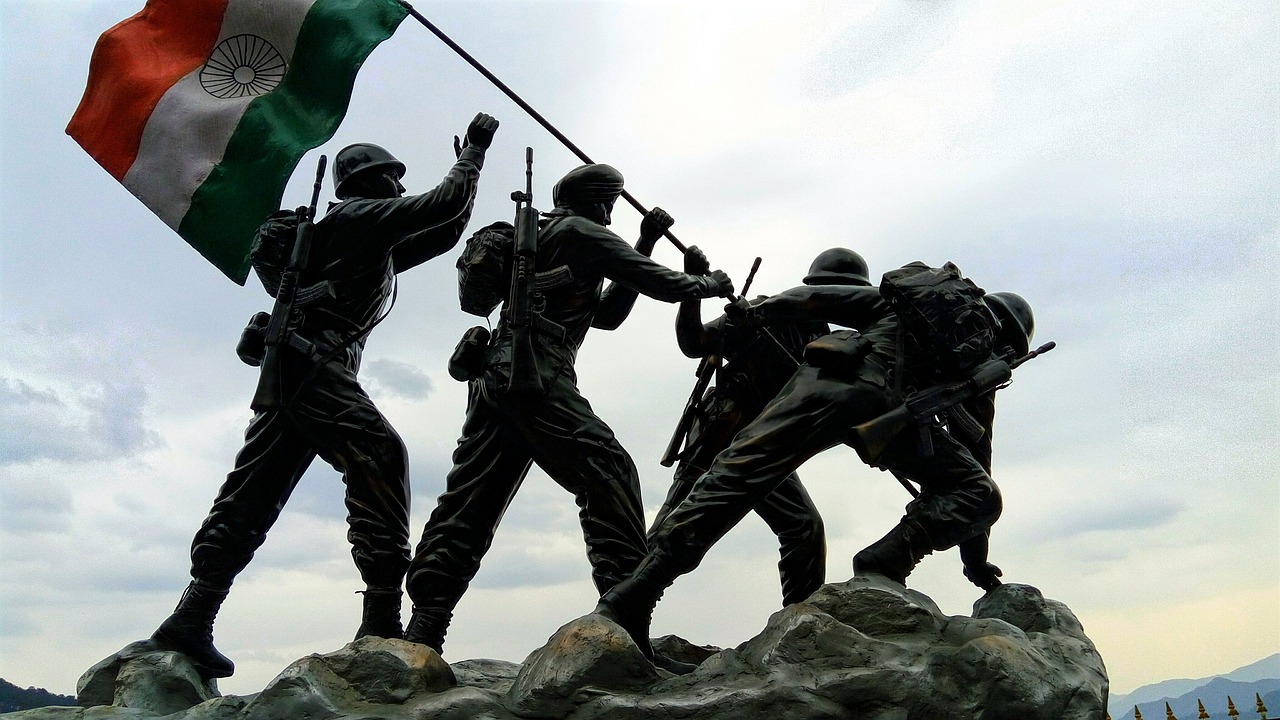
India, with its deep history and rich cultural heritage, stands as one of the oldest civilizations in the world. Known for its immense contributions to science, philosophy, art, and trade, ancient India was a land of prosperity and intellectual prowess. Despite its grandeur and status as a cradle of civilization, India has also been a land repeatedly subjected to foreign invasions and rule. This paradoxical history raises important questions: why did a nation with such profound resources and advancements fall to foreign powers multiple times? This article seeks to explore the underlying factors that contributed to India’s vulnerability to external forces, tracing the pattern of invasions from the time of Alexander the Great to the British colonial era.
The story of India’s subjugation is complex, involving a myriad of factors, including political disunity, social stratification, and external greed. India’s wealth and cultural diversity, while sources of strength, also made it a prime target for foreign conquerors. Furthermore, the internal divisions within the Indian subcontinent often prevented the formation of a unified resistance, allowing invaders to exploit these fractures. Understanding these dynamics is key to comprehending how and why India, despite its greatness, repeatedly fell under foreign control.
Ancient India: A Land of Prosperity
In the ancient world, India was known as a land of unimaginable wealth and intellectual achievement. The subcontinent was a major hub for trade, attracting merchants from as far away as Rome, China, and Persia. India’s contributions to mathematics, astronomy, and medicine were unparalleled, with scholars like Aryabhata and Sushruta laying the foundations for disciplines that would influence the world for centuries. This economic and cultural prosperity, however, also made India an attractive target for those looking to exploit its riches.
India’s wealth was not merely in its natural resources but also in its agricultural productivity, thriving urban centers, and advanced trade networks. The subcontinent’s strategic position in the Indian Ocean trade routes further enhanced its wealth, making it a key player in global commerce. However, this prosperity also carried risks. The riches of India were well-known beyond its borders, and the allure of its wealth drew the attention of conquerors who saw an opportunity to plunder and control one of the richest regions on Earth.
Yet, prosperity alone does not account for India’s vulnerability to invasion. The lack of a cohesive central authority, combined with the existence of multiple regional powers, meant that there was no unified defense mechanism against external threats. This disunity allowed invaders to conquer territories piecemeal, rather than facing a coordinated resistance from the entirety of the Indian subcontinent.
Alexander’s Invasion: The First Major Foreign Incursion
The invasion of India by Alexander the Great in 326 BCE represents one of the earliest and most significant foreign incursions into the subcontinent. Alexander, having conquered the vast Persian Empire, turned his sights eastward towards India, motivated by both the desire for expansion and the legendary tales of Indian wealth. His crossing of the Indus River and subsequent battles, particularly the Battle of the Hydaspes against King Porus, marked the beginning of direct foreign influence in Indian territory.
Alexander’s success in penetrating India can be attributed to several factors. First, the fragmented political landscape of India at the time meant that Alexander faced no unified Indian army but rather a collection of independent kingdoms, each dealing with him individually. This lack of a concerted effort allowed Alexander to exploit divisions and conquer regions with relative ease. The internal conflicts and rivalries among Indian rulers further weakened their ability to present a strong front against the Macedonian army.
Although Alexander’s direct rule in India was short-lived, with his successors (the Diadochi) failing to maintain control over the region after his death, his invasion left a lasting impact. The incursion highlighted the vulnerabilities of Indian polities to well-organized and militarily advanced foreign powers. It also set a precedent for future invasions, demonstrating that the riches of India could indeed be conquered by external forces, especially when internal divisions persisted.
Fragmented Kingdoms and Political Disunity
One of the most significant reasons behind India’s repeated subjugation by foreign powers was its chronic political disunity. Unlike other ancient civilizations that were often unified under strong central governments, India was typically divided into a multitude of regional kingdoms, each with its own rulers, interests, and agendas. This fragmentation was particularly evident during the periods leading up to major invasions, such as those by Alexander, the early Muslim conquerors, and eventually the British.
This lack of unity stemmed from a variety of factors. Geographically, the Indian subcontinent is vast and diverse, with natural barriers like mountains and rivers that historically made political unification difficult. Culturally, India has always been a mosaic of languages, religions, and ethnicities, which, while enriching its cultural fabric, also contributed to the challenges of forming a cohesive national identity. These divisions were often exacerbated by regional rivalries and conflicts, which prevented Indian rulers from coming together in the face of external threats.
The consequences of this disunity were profound. When invaders like Alexander or later the Mughals and the British arrived, they often faced minimal resistance from a coordinated Indian defense. Instead, they were able to pick off one kingdom at a time, exploiting the rivalries and divisions among Indian rulers. This fragmentation not only facilitated the initial invasions but also made it difficult for India to mount a sustained and effective resistance against foreign domination.
The Rise of the Mauryan Empire: A Brief Period of Unification
The Mauryan Empire, founded by Chandragupta Maurya in 322 BCE, represents one of the rare periods in Indian history where the subcontinent was largely unified under a single central authority. This empire, which at its height covered most of the Indian subcontinent, was a response to the fragmentation that had plagued India for centuries. Under the leadership of Chandragupta and his advisor Chanakya, the Mauryan Empire established a strong and centralized government, creating a more unified political structure that was capable of defending against external threats.
Chandragupta’s establishment of the Mauryan Empire was partly a reaction to the threat posed by the remnants of Alexander’s conquests in the northwest. Recognizing the dangers of a fragmented India, Chandragupta and Chanakya worked to consolidate power and create a centralized state that could resist foreign incursions. The success of this endeavor is evident in the empire’s expansion, which included the defeat of the Nanda Empire and the annexation of territories across northern and central India.
However, this period of unification was relatively short-lived. After the death of Chandragupta’s grandson, Ashoka, the empire began to decline, and the old pattern of political fragmentation re-emerged. The decline of the Mauryan Empire and the subsequent return of regionalism left India once again vulnerable to foreign invasions. The lesson from this era is clear: while unity provided temporary security, the inability to maintain that unity over the long term left India exposed to future threats.
Muslim Invasions: The Beginning of a New Era
The early medieval period in India witnessed a new wave of foreign invasions, this time from Muslim rulers originating in Central Asia. The invasions by Mahmud of Ghazni in the 11th century and Muhammad Ghori in the 12th century marked the beginning of significant Muslim influence in India, leading to the establishment of the Delhi Sultanate. These invasions were motivated by a combination of religious zeal, the desire for plunder, and the ambition to establish new territories under Muslim rule.
India’s vulnerability to these invasions was once again tied to its political disunity. The numerous regional kingdoms of northern India were unable to mount a unified defense against the well-organized and determined Muslim invaders. Additionally, the military tactics employed by the invaders, which included the use of cavalry and superior weaponry, often outmatched the armies of the Indian kingdoms. This technological and strategic advantage, coupled with the element of surprise, allowed the invaders to establish control over large parts of northern India relatively quickly.
The establishment of the Delhi Sultanate marked the beginning of a new era in Indian history, characterized by the fusion of Islamic and Indian cultures. However, it also represented a period of foreign domination that would continue in various forms for centuries. The success of these early Muslim invasions set the stage for the later Mughal Empire and underscored the persistent vulnerabilities that had allowed foreign powers to establish control over India.
The Mughal Empire: A Period of Greatness and Vulnerability
The Mughal Empire, founded by Babur in 1526, is often regarded as one of the greatest empires in Indian history. Under rulers like Akbar, Jahangir, and Shah Jahan, the Mughals expanded their territory across most of the Indian subcontinent and established a strong central government. This period was marked by economic prosperity, cultural flourishing, and significant architectural achievements, including the construction of the Taj Mahal. The Mughals also introduced administrative reforms that contributed to the stability and efficiency of their rule.
However, despite their initial strength, the Mughal Empire was not immune to the same vulnerabilities that had plagued earlier Indian states. One of the primary weaknesses of the Mughal Empire was the issue of succession. The empire’s vast territories and immense wealth made it a prize worth fighting for, leading to frequent succession struggles and civil wars. These internal conflicts often weakened the empire, making it more susceptible to external threats, particularly from European powers who were beginning to establish their presence in India.
Furthermore, the later Mughal rulers, particularly after Aurangzeb, were less capable than their predecessors, leading to a gradual decline in the empire’s power and influence. The inability of the Mughal Empire to adapt to the changing political and military landscape of the 18th century left it vulnerable to the growing influence of the British East India Company. The decline of the Mughals marked the end of one era and the beginning of another, as India would soon face a new and more enduring form of foreign domination.
British Colonization: A New Form of Subjugation
The arrival of the British in India, initially through the East India Company, marked the beginning of a new form of foreign domination. Unlike previous invaders who sought to conquer and rule, the British aimed to exploit India’s resources for the benefit of their growing empire. The gradual expansion of British control over India, culminating in the establishment of direct colonial rule after the Sepoy Mutiny of 1857, represented a profound shift in the nature of foreign domination in India.
The British were able to establish control over India through a combination of military might, diplomatic manipulation, and economic exploitation. They took advantage of the political fragmentation that had re-emerged after the decline of the Mughal Empire, forming alliances with regional rulers and using their superior military technology to defeat those who resisted. The British also introduced new economic policies that systematically drained India’s wealth, leading to widespread poverty and economic decline.
The British colonization of India was characterized by the imposition of foreign values, systems, and structures, which had a lasting impact on Indian society. The British introduced a centralized administrative system, a legal code, and an education system designed to serve their interests. This period of colonization not only subjugated India but also laid the foundations for the economic and social challenges that the country would face in the post-colonial era.
Economic Exploitation and Cultural Suppression
One of the defining features of British rule in India was the systematic economic exploitation of the subcontinent. The British implemented policies that were designed to benefit their own economy at the expense of India’s. This included the deindustrialization of India’s textile industry, the imposition of heavy taxes on Indian farmers, and the extraction of resources for export to Britain. These policies led to widespread poverty, famine, and economic decline in India, which had once been one of the wealthiest regions in the world.
The British also sought to suppress Indian culture and impose their own values and systems. They introduced a Western education system that prioritized English language and literature over traditional Indian knowledge systems. This cultural imperialism was aimed at creating a class of Indians who were loyal to British interests and who would serve as intermediaries between the colonial rulers and the Indian population. The suppression of Indian culture and the imposition of foreign values created a deep sense of alienation among many Indians and contributed to the growing resentment against British rule.
The economic exploitation and cultural suppression carried out by the British had long-lasting effects on Indian society. The systematic draining of India’s wealth contributed to the economic challenges that the country faced after independence, while the cultural suppression led to a loss of confidence and self-esteem among many Indians. These factors played a significant role in shaping the Indian independence movement and the eventual struggle to reclaim India’s sovereignty.
The Role of Indian Collaborators
The success of British colonization in India was not solely due to British military and economic power. A significant factor in their ability to maintain control over such a vast and diverse region was the collaboration of Indian elites and rulers who aligned themselves with British interests. These collaborators played a crucial role in the administration of British India, serving as intermediaries, tax collectors, and soldiers in the British army. Their support was often secured through a combination of coercion, economic incentives, and the promise of power and prestige.
Indian collaborators were often motivated by a desire to maintain their own power and status within the colonial system. Many regional rulers and landowners saw collaboration with the British as a way to protect their own interests and avoid direct confrontation with the colonial authorities. In some cases, collaboration was also driven by a belief that British rule was inevitable and that resistance would be futile. This pragmatism, however, came at a cost, as it often meant compromising the interests of the broader Indian population.
The role of Indian collaborators in the success of British rule highlights the complex and multifaceted nature of colonialism. While the British were the primary architects of colonial rule, they relied heavily on the support of local elites to maintain their control. This collaboration also contributed to the internal divisions within Indian society, as those who resisted British rule often found themselves in conflict with those who collaborated. These divisions would later play a role in the challenges faced by the Indian independence movement.
The Indian Independence Movement: A Struggle for Sovereignty
The Indian independence movement, which gained momentum in the early 20th century, was a direct response to the economic exploitation, cultural suppression, and political subjugation imposed by British rule. The movement was characterized by a wide range of strategies and ideologies, from the nonviolent civil disobedience advocated by Mahatma Gandhi to the more radical approaches of leaders like Subhas Chandra Bose. Despite these differences, the common goal was to achieve sovereignty and end British rule in India.
The independence movement was fueled by a growing sense of national identity and a desire to reclaim India’s cultural heritage and economic resources. The British suppression of Indian culture and the imposition of foreign values had created a deep sense of alienation among many Indians, leading to a resurgence of interest in India’s ancient traditions and history. This cultural revival was accompanied by a political awakening, as Indians began to demand greater autonomy and self-governance.
The struggle for independence was long and arduous, with many setbacks along the way. The British response to the movement was often brutal, with leaders and activists facing imprisonment, violence, and repression. However, the determination and resilience of the Indian people eventually led to success, culminating in the independence of India in 1947. The legacy of the independence movement is one of courage, sacrifice, and the enduring spirit of a nation that refused to be subdued by foreign powers.
Conclusion: Lessons from India’s History of Foreign Domination
India’s history of foreign domination is a complex and multifaceted narrative that offers important lessons for the present and future. The repeated invasions and subjugation of India by foreign powers were the result of a combination of internal vulnerabilities and external ambitions. Political fragmentation, social stratification, and the lure of India’s wealth made the subcontinent a prime target for conquerors throughout history. The inability to maintain political unity and the role of collaborators further contributed to India’s susceptibility to foreign rule.
However, India’s history is also a story of resilience and resistance. Despite the many challenges posed by foreign domination, the Indian people have repeatedly demonstrated their ability to adapt, survive, and ultimately overcome. The independence movement and the eventual establishment of a sovereign Indian state are testaments to the strength of India’s national identity and the enduring spirit of its people.
As India continues to navigate the challenges of the modern world, the lessons of its history remain relevant. The importance of unity, the dangers of internal division, and the need for vigilance against external threats are themes that continue to resonate. By understanding the factors that led to India’s past subjugation, the nation can better prepare itself to face the challenges of the future, ensuring that its sovereignty and cultural heritage are preserved for generations to come